

Frequently asked questions.
FAQs
-
Passenger weight limit is 230lb (104kg) fully clothed. NO EXCEPTIONS due to aircraft design and centre of gravity limits. Weight limits aside, larger body types and very tall people (over 6’4”) may have a hard time fitting comfortably in the cockpit. If you have any concerns, please give us a call.
-
Did you know you can solo a glider at age 14? You can then work through the curriculum to prepare for your written and flight tests that can be completed at the minimum age of 16. For sightseeing flights, we generally suggest ages 11+. Passengers need to be big enough to be strapped in securely, and independent enough to enjoy a flight on their own with our pilot.
-
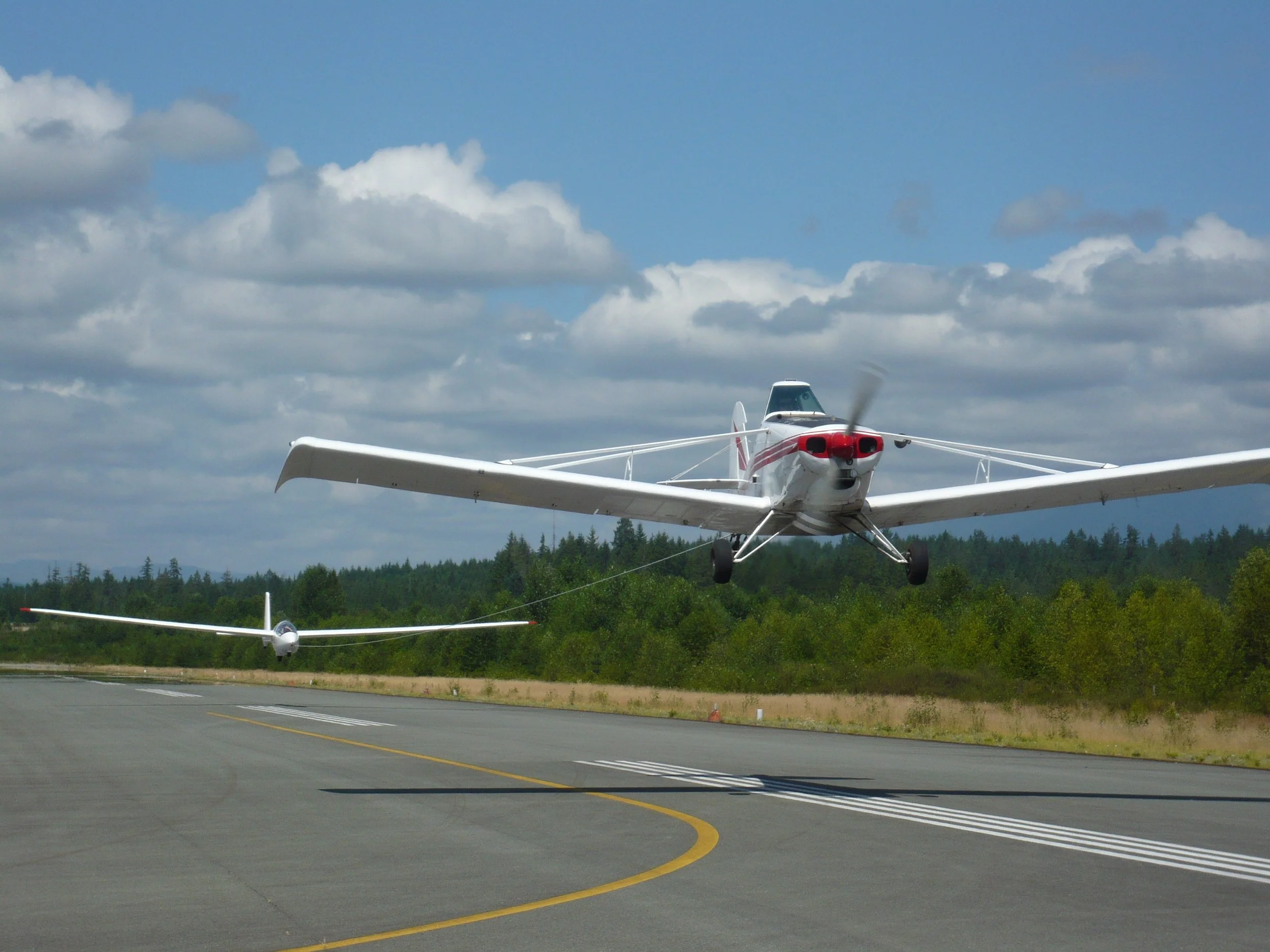
At VISC we aerotow behind a Piper Pawnee tow plane and then release at altitude. Approximately 20% of your flight time will be “on the tow”. Some clubs (mainly overseas) use winch launches, but our location isn’t suited for it.
-
We have several gliders in the fleet. Our primary two-seat glider is a Polish-designed and built PW-6U, manufactured at Glider Factory Jezow. With a two-seat tandem cockpit, fiberglass construction, and 16m wings, it has proven to be a great trainer and cross-country soaring machine. It weights 360kg (790lb) without crew. We have operated this glider from new in 2007. We also have a PW-5, a very similar single-seat version. In 2026 we are taking delivery of an ASK-21 Mi - a self-launching two-seat glider made by Schleicher in Germany.
-
Yes! Like any form of aviation, there are inherent risks involved, such as weather conditions, pilot error, and mechanical failures. Gliders, however, are designed to be aerodynamically stable and are subject to rigorous maintenance checks. In addition, our pilots undergo extensive training to handle various situations and minimize risks. VISC has a 100% safety record since it opened in 2007.
Certain activities such as flying as a passenger with an airline have a legitimate expectation of a very high level of safety. In contrast, some adventurous activities, such as bungee jumping, parachuting or motor sport present a higher level of personal risk which participants readily consent to as part of the recreational value of taking part. Flying as a passenger in a glider is an adventurous activity and comes with a certain level of risk. If at any time up until the launch, you decide the level of risk is unacceptable to you, a full ‘no-questions-asked’ refund will be made.
-
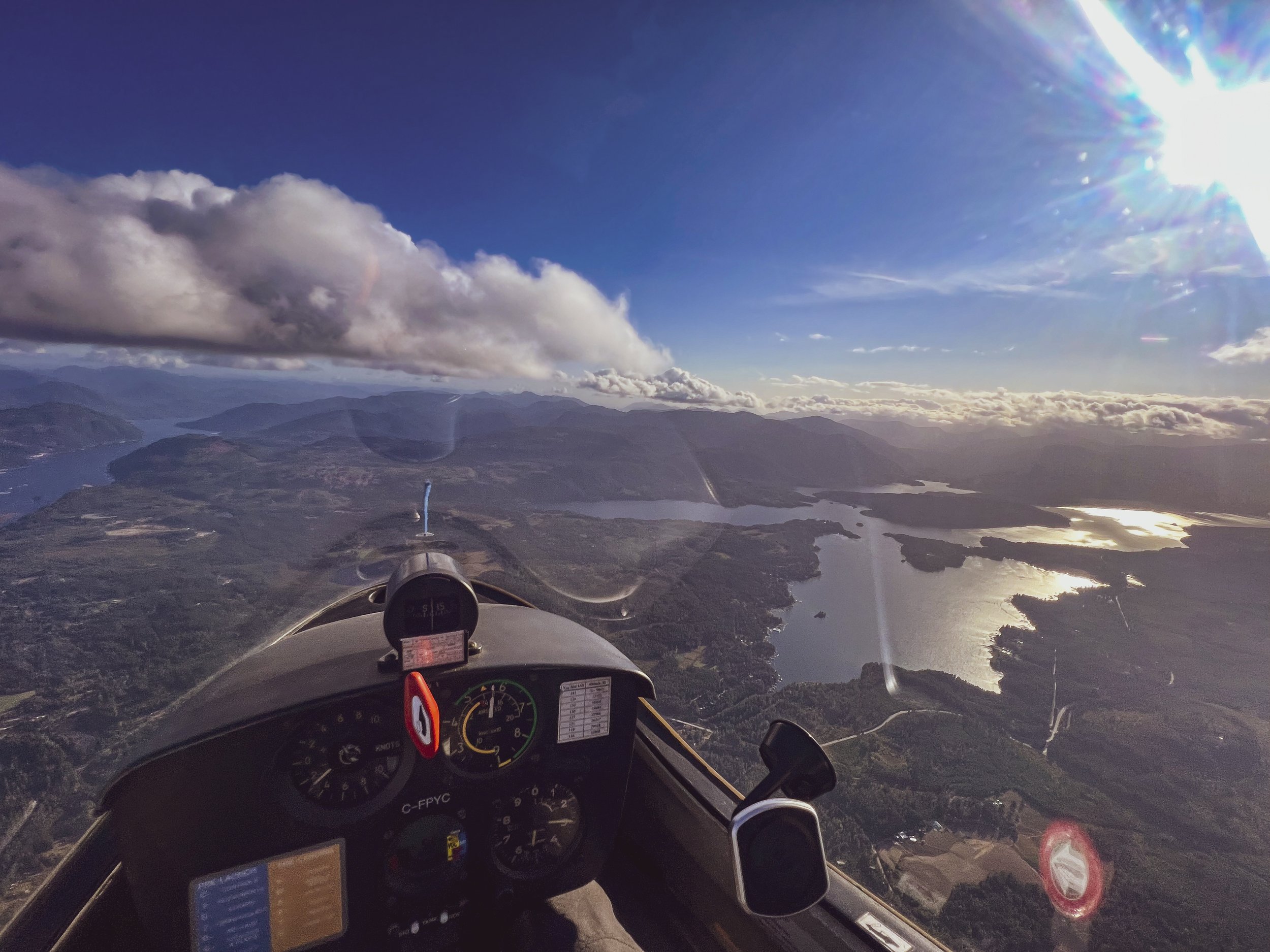
Surprisingly, many people who are afraid of heights have no problem after a few moments airborne in a glider. The glider feels solid and stable in the air, and the harness and seat gives you a secure feeling that you are "in" the glider as opposed to "on" it.
As far as airsickness goes, we have had very few people get sick to their stomach. If we know a passenger might be susceptible to motion sickness we keep the flight very smooth and gentle on the controls. We can even let the passenger try flying the glider, which takes their mind off any feeling of unease. If at any time the guest feels unwell, we can head back to the airport and land within minutes.
-
We are at the Alberni Valley Regional Airport, west of the town of Port Alberni, British Columbia, BC. When you drive to the airport, you’ll see a large white and green fabric hangar. This is where VISC and the AVSA club stages from each day, but flying operations happen at the end of runway 12. If you arrive at the hangar and nobody is around, please call us and we’ll soon meet you.
-
We sure can! Potential aviators interested in learning more about flight training are always welcome to come by the hangar and get a tour - give us a call or email to arrange a time. We also have a GUIDE TO LEARNING TO FLY GLIDERS PDF that answers many questions, including cost and time it takes.
“I really enjoyed the glider flight over the Alberni Valley. I was given this flight as a gift, and it's one of the best gifts I've ever received.”
— Dan, Tripadvisor Review