
How Sunshine Makes Gliders Fly
Mother Nature’s invisible forces that keep sailplanes soaring for hours over the Alberni Valley
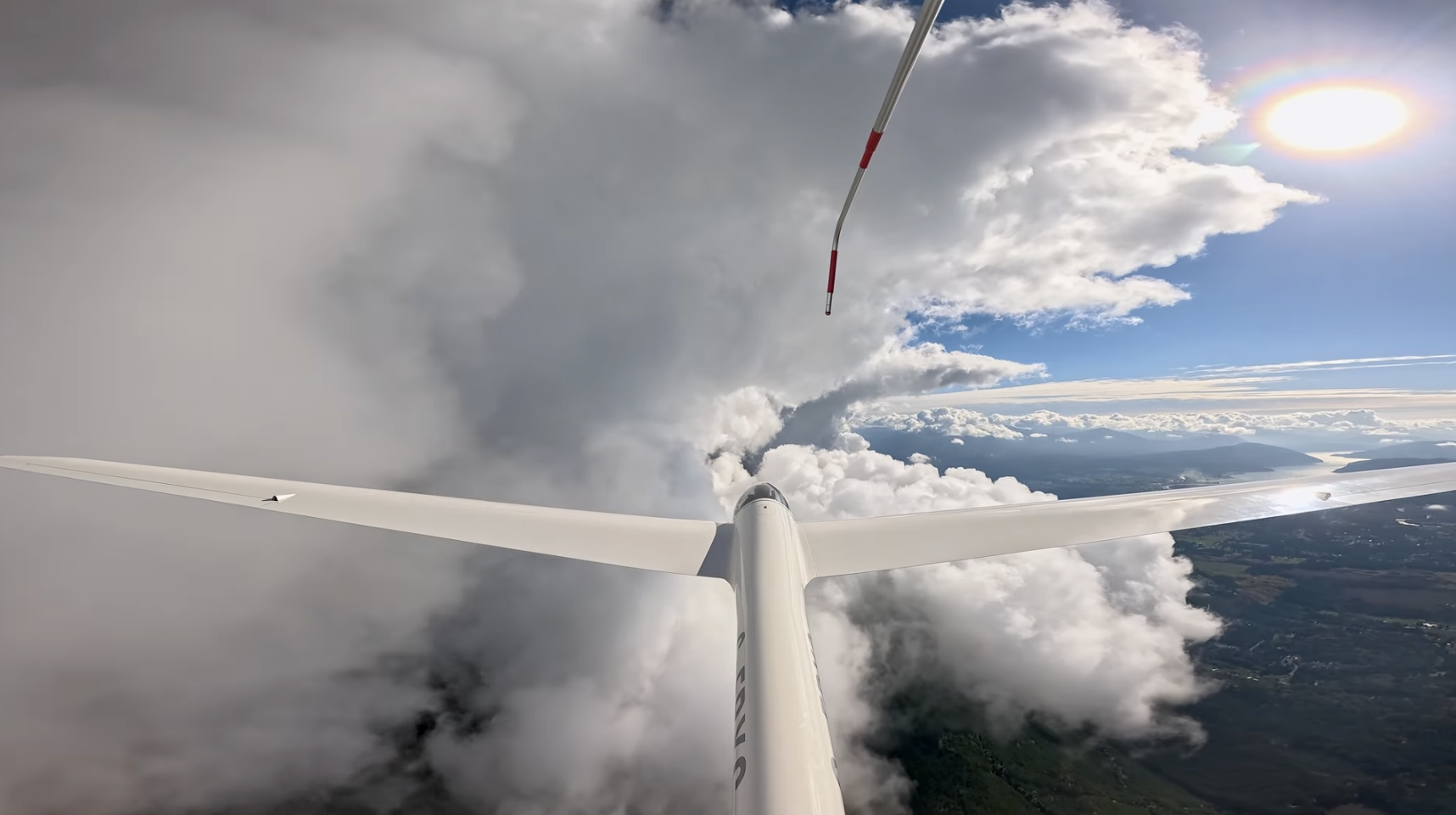
A glider soars amongst impressive clouds over Vancouver Island
On a warm summer afternoon in the Alberni Valley, you may glance upward and spot a white glider circling above the Beaufort Range. No engine noise, just a sleek aircraft climbing higher and higher in complete silence. The obvious question is: how?
The answer begins with sunshine.
Most people think of the sky as empty space, but to glider pilots, it is alive with energy and movement. Every sunny day, the landscape around us creates invisible currents of rising and sinking air. Farm fields, rocky outcrops, forests, lakes, and even the mall parking lots heat up differently under the sun’s rays. As the ground warms, pockets of heated air begin to rise like giant bubbles in a pot of boiling water. These rising columns of air are called thermals.
The next time you see vultures or eagles circling lazily overhead, there’s a good chance they’ve found rising air. Similarly, glider pilots circle tightly to stay as close to the core of these thermals as possible, gaining altitude at up to 1000ft per minute which is faster than many small powered aircraft. In many ways, glider pilots simply learned to fly by paying attention to birds and they are a valuable clue for finding lift.
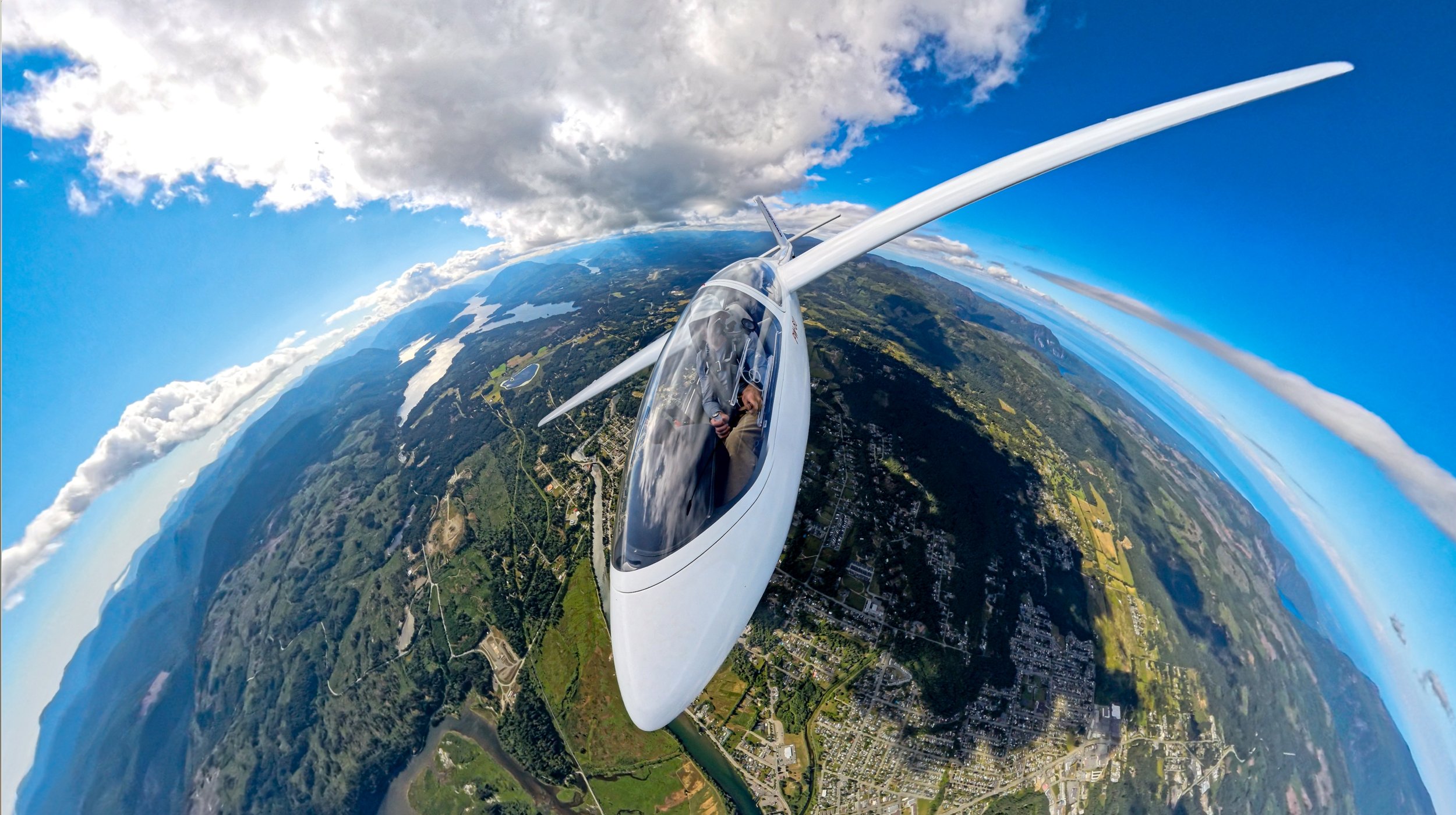
A glider pilot circles under a cumulus cloud, climbing fast.
The same geography that makes the Alberni Valley so beautiful also makes it an exceptional place to soar. Warm air rises off the flat valley floor and up the surrounding ridges, while sea breezes push in from the coasts and up the inlet. Together, these forces create conditions that can keep sailplanes airborne for hours. On the flipside, cool Pacific air dumping over the mountains or sneaking in over the Hump can also blanket the valley floor, shutting down any thermal development. You learn a lot about local weather when you start flying gliders!
From above, the view is unlike anything most people ever experience. Great Central and Sproat Lake stretch across the valley like starfish. The Broken Group of islands glimmer in the distance, often with a fog bank sitting just offshore. On crystal clear days even the skyline of Vancouver is defined against the horizon with Mount Baker as the backdrop.
Without an engine running, soaring feels completely different from powered flight. There is no vibration through the seat and no need for headsets. The only sound is the rush of the air over the canopy. This aural cue is something glider pilots listen for, offering them a natural indication of airspeed. Many first-time passengers expect the experience to feel dramatic or frightening. Instead, most describe it as peaceful.
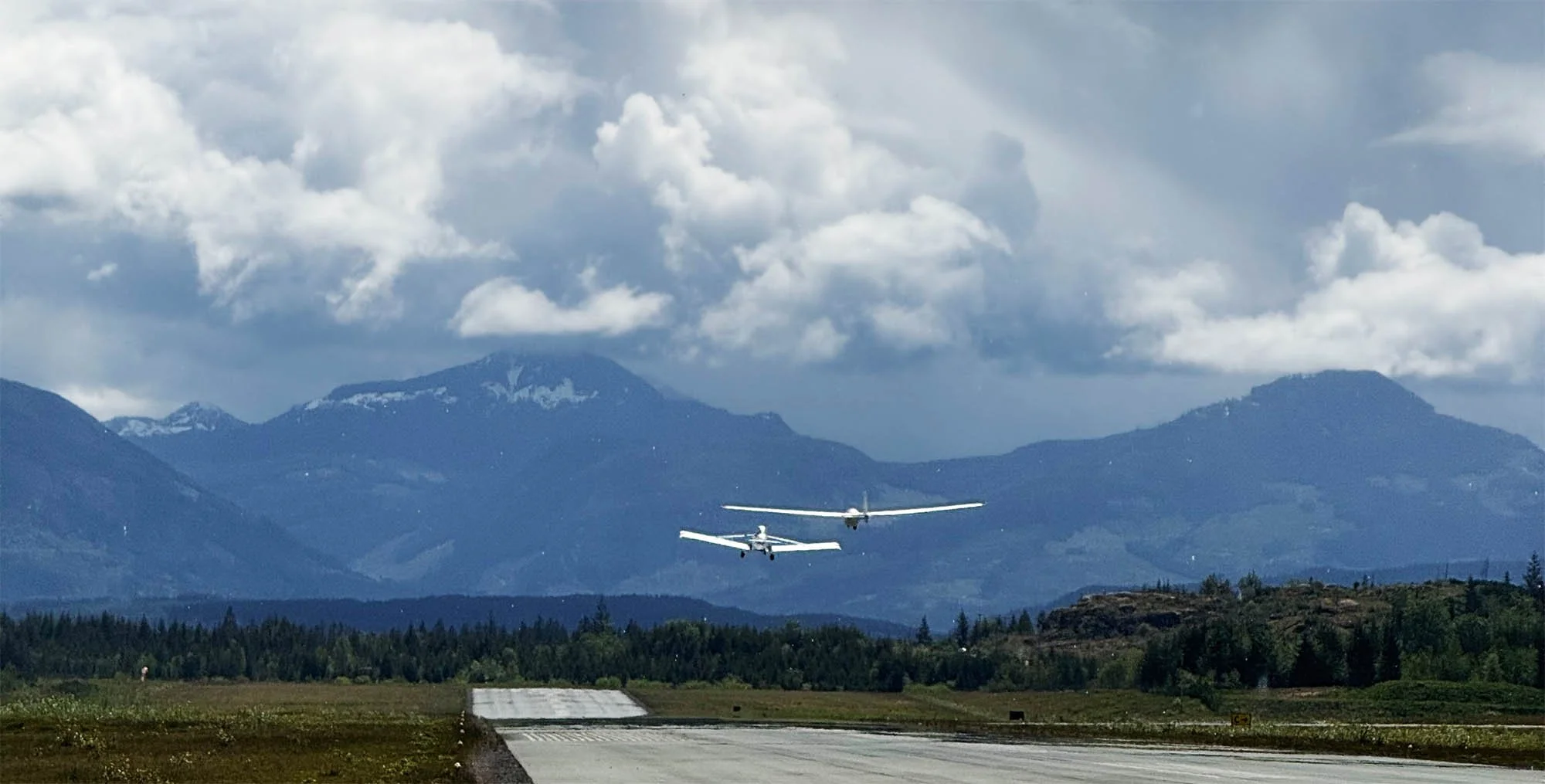
Climbing out under tow towards an unstable sky with - hopefully - a lot of lift to fly in!
Of course, people often wonder whether flying without an engine is safe. Glider pilots spend their entire training learning how to fly and land without power. And that’s exactly what the aircraft is designed to do. Modern high-performance sailplanes have impressive glide performance, capable of travelling long distances from altitude even in completely still air. In fact, a glider at 1800m above Mount Arrowsmith could potentially glide over 60km. That’s the distance from Port Alberni to Comox. With limited outlanding opportunities due to the terrain, local pilots always remain within gliding distance of the airport. Even if they are off exploring the Comox Glacier or Mount 5040, they can make it home.
For many people, a glider flight changes the way they see the sky itself. The invisible atmosphere above the valley begins to feel more like a landscape of its own, constantly shifting, flowing, and moving with energy. Don’t be surprised if you catch yourself staring at the clouds more often!
This hidden world has drawn people to soaring for generations. Every flight is a mental puzzle to solve, deciphering clues to unlock the secrets of the atmosphere. Then, planning a route between clues to maximize distance flown and altitude gained. More than any other form of aviation, soaring is a lifelong sport. Many simply fall in love with the calm and perspective that comes from drifting quietly above the world.
So, exactly how does that glider stay up there? The answer, it turns out, has been shining down on us all along.
Scenic and introductory glider flights are offered April through October by Vancouver Island Soaring Centre at the Alberni Valley Regional Airport. All ages welcome – no experience needed.